
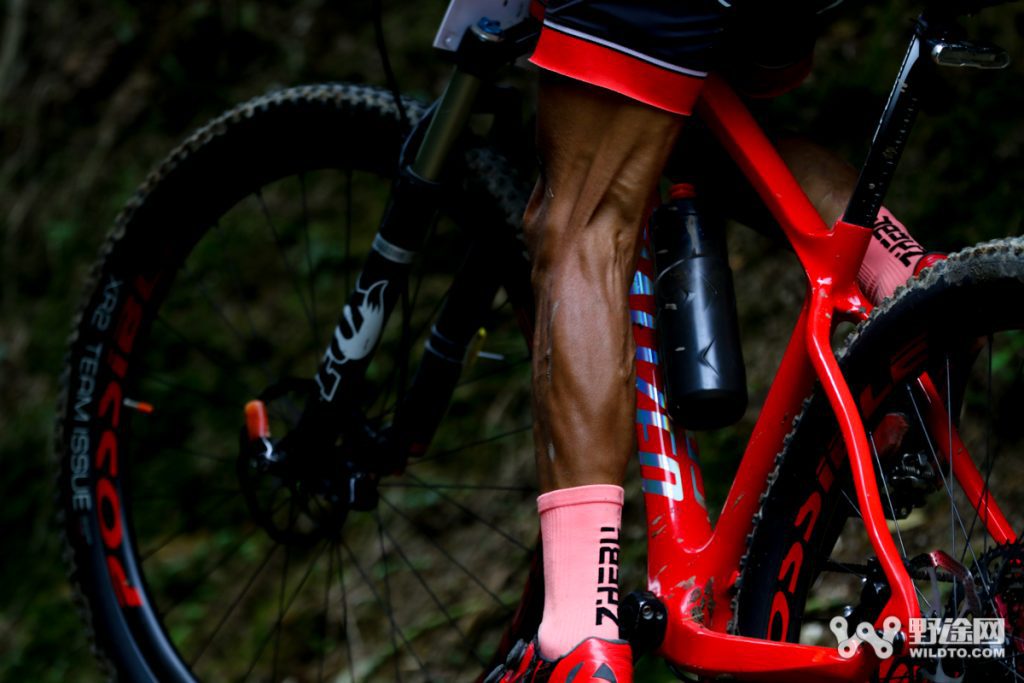

Cycling is an excellent form of exercise for overall fitness. As highlighted in health publications, it can improve physical condition and protect heart health. A common recommendation is to maintain a cadence of 60–80 RPM and include a 20-minute warm-up at a high cadence with low resistance to break a light sweat.
Understanding which muscles cycling targets can significantly impact your training effectiveness and help prevent injuries. Anyone who has pushed hard on a bike knows it’s a challenging workout that can drive your heart rate to its maximum. The most obvious side effect of a tough ride is often the burning sensation in your legs.
Primary Muscles Used in Cycling
Quadriceps
Research in the European Journal of Applied Physiology indicates that the vastus lateralis and vastus medialis—key parts of the quads—are most activated during the first half of the downward pedal stroke (from the top, at 0°, to the bottom, around 180°). The study found peak activation for these muscles occurs at about 80.8°. The rectus femoris, the central muscle at the front of the thigh, is activated even earlier.
Using clipless pedals or toe clips can alter muscle engagement. One study in the Scandinavian Journal of Rehabilitation Medicine found that using toe clips caused the rectus femoris to activate 20° sooner in the pedal stroke.
Hamstrings
The hamstrings at the back of the thigh are another major muscle group used in cycling, working in coordination with the quadriceps. The European Journal of Applied Physiology suggests an ideal recruitment pattern exists between these muscle groups to generate power.
Unsurprisingly, hamstrings are primarily activated in the later phase of the pedal stroke. Studies show the semimembranosus and semitendinosus muscles are active between crank angles of 150° and 270°. The biceps femoris, the third hamstring muscle, is engaged throughout all phases of the pedaling motion, according to research in the Journal of Electromyography and Kinesiology.
Tibialis Anterior
The tibialis anterior, the largest muscle in the front compartment of the lower leg, is identified as a fundamental muscle in cycling. It runs along your shin.
Research in the Journal of Orthopaedic & Sports Physical Therapy found the tibialis anterior is the only shin muscle activated during the first half of the pedal stroke (before the crank reaches 180°). Interestingly, despite its important role, its activity level is lower during cycling than during walking. This makes cycling a beneficial rehabilitation exercise for individuals recovering from certain ligament or Achilles tendon injuries.
Glutes and Calves
While not the focus of the cited studies, the gluteal muscles (maximus and medius) are crucial for power generation, especially during seated climbing and forceful downstrokes. The calf muscles (gastrocnemius and soleus) also play a significant role in stabilizing the ankle and facilitating the “scraping” motion at the bottom of the pedal stroke.
The Critical Importance of Post-Ride Stretching
As we’ve seen, cycling utilizes a wide range of muscles, often in coordinated efforts. Aiding their proper recovery is essential.
Avoid Static Stretching Before Riding
It’s now widely recognized that static stretching before cycling—or most exercise—is counterproductive. The Mayo Clinic notes that stretching cold muscles can lead to injury and may actually decrease performance. Research indicates that pre-ride static stretching can weaken hamstring strength, which is particularly relevant given the importance of hamstrings in cycling.
Opt for a Dynamic Warm-Up
The current recommendation is to perform a dynamic warm-up. This involves moving the muscles through a range of motion simultaneously, preparing them for activity. Examples include leg swings, torso twists, and easy pedaling.
Make Post-Ride Stretching a Habit
While fewer studies focus specifically on post-cycling stretching, research from the University of Medical Sciences in Poznań, Poland, found a link between stretching and injury prevention. The researchers suggested that stretching after riding is recommended to help prevent recurring muscle soreness.
After your ride, when muscles are warm and pliable, is the ideal time for static stretching. Key areas to focus on include:
- Quadriceps
- Hamstrings
- Hip Flexors
- Glutes
- Calves
Hold each stretch gently for 20-30 seconds without bouncing. This practice aids recovery, reduces stiffness, and helps maintain flexibility, contributing to better performance and long-term joint health.


