
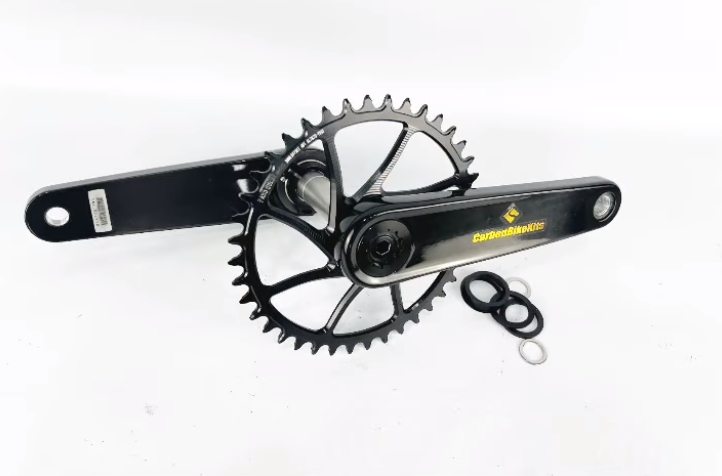

If you’ve been watching the Tour de France lately, you might have noticed something curious: top riders like Tadej Pogačar and Jonas Vingegaard are rocking shorter crank arms—some as short as 165mm. That’s shorter than what many amateur cyclists use. So what’s the deal? Is shorter really better?
Turns out, crank length isn’t just a number. It’s a biomechanical game-changer.
Crank Length 101: It’s All About Leverage
Your crank arms are the levers connecting your pedals to the chainring. Their length determines the size of the circle your feet trace with each pedal stroke.
Longer cranks = bigger circle, more leverage per stroke, but slower cadence and deeper knee bend.
Shorter cranks = smaller circle, less leverage per stroke, but easier to spin faster with less joint strain.
Think of it like this:
Long cranks = slow but powerful
Short cranks = quick but smooth
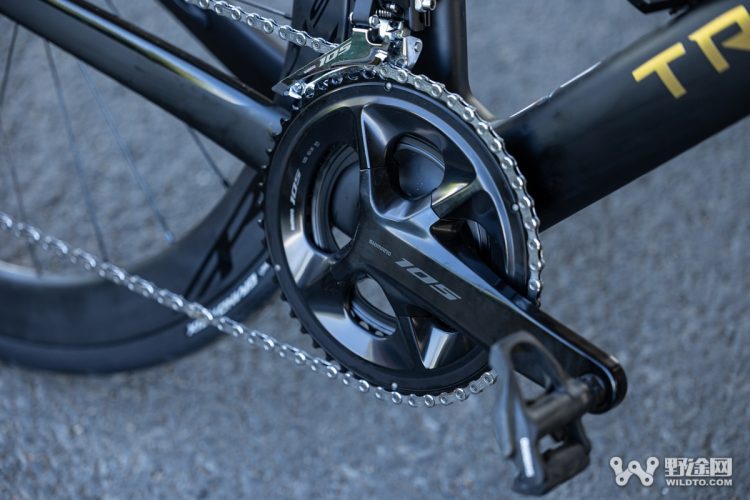
Why the Pros Are Making the Switch
It’s not a fashion statement—it’s a performance upgrade. Here’s what shorter cranks deliver:
1. Less Knee Stress, More Endurance
Pro cyclists ride over 20,000 km a year. Knee health is non-negotiable.
Long cranks force the knee into deeper flexion at the top of the stroke—like bringing your knee closer to your chest—which increases patellofemoral pressure.
Shorter cranks reduce knee flexion by about 10%, lowering injury risk and delaying fatigue. Vingegaard reported less knee strain during long climbs after switching to 160mm cranks.
2. Higher Cadence, Steady Power
Power = Force × Cadence.
Long cranks may feel “stronger” per stroke, but they make it harder to maintain high cadence. Short cranks let riders spin comfortably at 90–100 RPM, distributing effort more evenly and delaying muscle fatigue.
Pogačar, for example, maintains a crisp 95 RPM on climbs—something much tougher with longer arms.
3. Better Aerodynamics + Clearance
Shorter cranks allow a slightly higher saddle height, which encourages a more aggressive, aerodynamic torso angle without closing the hip angle too much.
Studies suggest a 3% aero gain from 165mm vs. 170mm cranks—enough to matter in a time trial.
Plus, shorter arms mean better pedal clearance in corners. No more scary pedal strikes!
How to Choose Your Crank Length: A Practical Guide
Don’t just copy the pros. Your ideal length depends on your body and riding style.
Leg Length Matters More Than Height
The old “170cm tall = 170mm crank” rule is outdated.
A better gauge:
When your pedal is at the top position, your knee should be slightly bent (about 15–20°). Not straight, not crammed toward your chest.
Quick reference:
Riders under 165cm → 165–170mm
Riders 170–180cm → 170–172.5mm
Riders over 180cm → 172.5–175mm
Match Crank Length to Your Riding
Climbers & endurance riders: Go shorter (165–170mm) for easier spinning.
Sprinters & flat-road specialists: Consider longer cranks (172.5–175mm) for raw power.
Beginners & recreational riders: Start shorter. Better control, less joint stress.
Listen to Your Body
Knee pain? Try going 5mm shorter.
Feeling inefficient or “spinning out”? Try 5mm longer.
And remember: when you change crank length, always re-adjust your saddle height accordingly.
The Bottom Line: There’s No “Perfect” Length
Pro cyclists optimize for marginal gains. You should optimize for comfort, joy, and sustainability.
The best crank length is the one that lets you ride longer, stronger, and pain-free.
Not sure where to start? Try a bike fit. Or begin with a moderate length and tune based on feel. After all, the best bike setup is the one you don’t notice—because it just feels right.
We’d love to hear: What crank length are you using? Have you ever switched and felt a difference? Drop a comment below! 👇


