


Cannondale has long been recognized for its innovative spirit, from the iconic Lefty Oliver suspension fork to integrated electronic systems on its Synapse road bikes. But one of the brand’s most ambitious ideas dates back to 2012, when it collaborated with Priority Designs to create the CERV—a concept bicycle featuring real-time adjustable geometry.
The CERV presented a radical, almost transformer-like design—chainless and futuristic—pointing toward what the road bike of tomorrow could become. With a few simple adjustments, it allowed a rider to switch from a relaxed, upright posture to an aggressive, race-ready stance.
If realized, the CERV would have functioned as both a competitive race machine and a comfortable endurance bike, all thanks to its dynamic frame architecture.
Rethinking Rider Position
Cannondale aimed to enable multiple riding positions on a single bike—specifically, altering the front-end setup without changing saddle height or crank position.
On a traditional road bike, riders can shift their hands between the hoods, tops, or drops to adjust their upper body. The CERV went much further, allowing the handlebars to move up and down as well as forward and back. This provided a wide range of reach and stack measurements, adaptable to different road conditions or personal preference.
An Unconventional Design
Such flexibility couldn’t be achieved with a standard fork. Instead, the CERV used a single-sided front end, though its design differed significantly from mountain bike “lefty” forks.
Priority Designs engineered a system that transferred steering input from the handlebars to the front wheel through the frame itself, not the fork.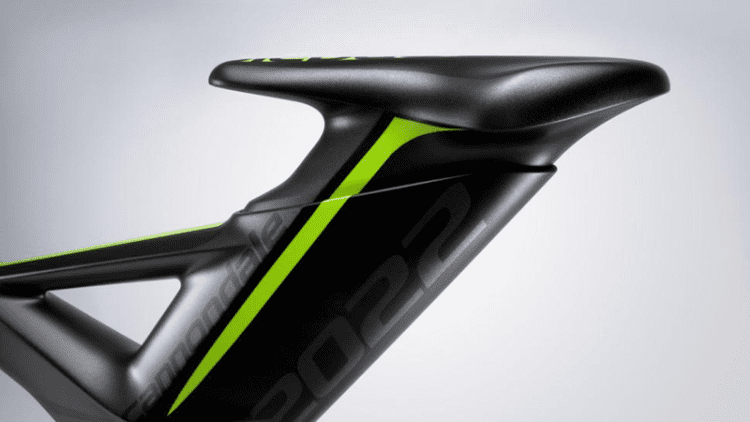
The carbon fiber bike was also designed to include electronic shifting, a fully enclosed shaft-drive system, and an integrated computer display.
Additional forward-thinking features included one-piece carbon wheels with six-blade spokes, hydraulic brakes combining elements of rim and disc brake technology—rare for 2012—and a chainless drivetrain that transferred power to the rear wheel via an axle running along the single-sided chainstay.
Prototype and Legacy
Priority Designs built a functional prototype to validate the engineering before final assembly, finishing, and painting. The Cannondale CERV made its debut at Eurobike 2012, drawing significant attention. Unsurprisingly for a concept this advanced, it never reached production.
Yet, even today—over a decade later—the CERV stands as a bold and imaginative vision of what’s possible in bicycle design. How would you redesign the modern bike if geometry were no longer fixed?


