

I. Vastness
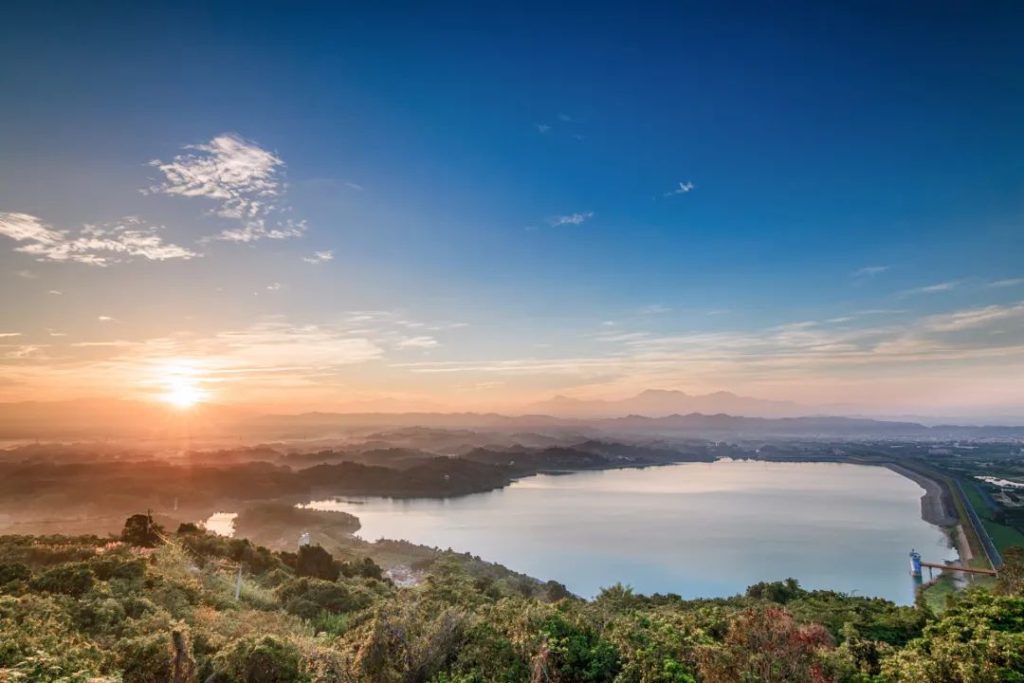
Beyond Pingtung, the land opens into flat, expansive plains. The NE-SW trending Central Mountain Range dominates the island’s interior, forcing the plains to spread across the periphery. Compared to the narrow, elongated east, the western plains feel vast and wide.
Over 80% of Taiwan’s plains lie west of the mountains. Looking out, the seemingly endless land is cradled by clear, winding rivers. The Zhuoshui River, Taiwan’s largest, flows west from the mountains, forming a massive alluvial fan that provides water and fertile farmland. With flat terrain, rich soil, ample water, and a climate of summer rains… nature had set the stage perfectly, waiting only for its main actors to arrive.
II. A Glimpse
Looking west, the mainland of China lies across the Taiwan Strait. To the southeast, the edge of the South China Sea bustles with activity. This maritime position drew people across the water, and the superior natural conditions convinced them to stay, forming villages and cities, evolving from an agrarian society toward industry.
Western Taiwan modernized faster than the east. Taipei, the national capital, and Kaohsiung, the second-largest city, anchor the north and southwest respectively. Together with Taichung in central-western Taiwan, they form the core of the island’s industrial framework.
Our visit was a whirlwind, time too short to grasp the depth behind western Taiwan’s prosperity. We could only pause at a city’s corner, hoping to read a few lines, a few phrases, or capture a single photograph that would crystallize our impression of this place.
III. Tracing the Pulse of Industry
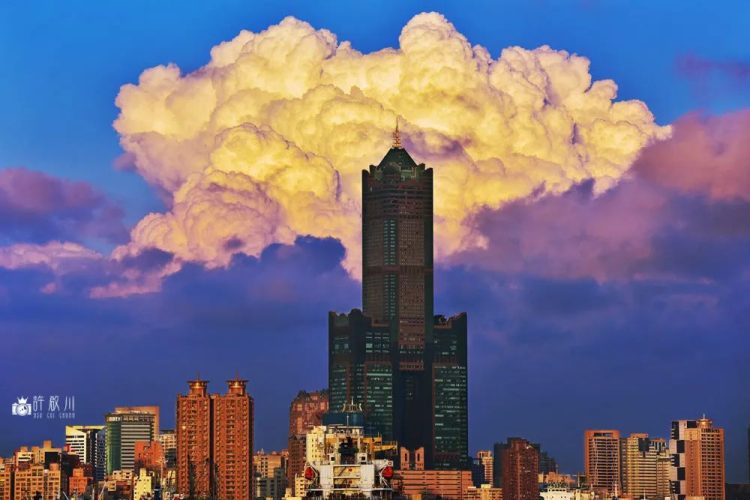
In Kaohsiung, we chose to visit the National Science and Technology Museum to trace the pulse of modern industry. Limited land and scarce resources shaped Taiwan’s industrial model into one similar to Japan’s: “import-process-export.” Manufacturing forms the core, encompassing textiles, electronics, chemicals, and food processing, followed by power generation, mining, and construction.
Located at the southern mouth of the Taiwan Strait, Kaohsiung is the maritime gateway to southern Taiwan. It is a major industrial center, home to large-scale heavy industries like China Steel, CSBC Corporation, and oil refineries. It is also a vital transport hub, boasting the Port of Kaohsiung, Taiwan’s largest and one of the world’s busiest cargo ports.
The National Science and Technology Museum, located in Kaohsiung’s Sanmin District, is Taiwan’s first museum of applied science and southern Taiwan’s first national social education institution.
Our visit—though “visit” isn’t quite the right word—began the moment we interacted with the first exhibit. My friend and I instinctively shifted from spectators to learners, actively participating in this engaging and scientific form of museum education.
IV. Interaction and Design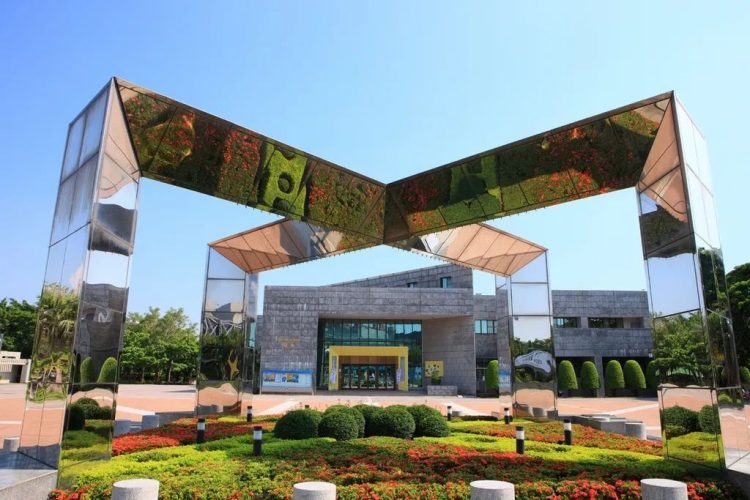
The “Age of Excavating Artifacts” interactive display left a lasting impression.
Moving beyond traditional text-and-image displays, it created a scenario based on its content: an archaeological dig.
The installation was a massive, wall-sized model of a rock stratum, with various “treasures” hidden within. Visitors used a handheld sensor to find them.
When the sensor aligned with a hidden item’s receiver, a large screen displayed the item’s name, historical period, and the process of dating it through radiocarbon analysis.
Holding the sensor and searching simulated the experience of an archaeological excavation. How could you not carefully read about something you had “discovered” yourself?
Beyond this, the museum’s design was exceptional. The “Health Exploration” hall was a stunning fusion of knowledge and design aesthetics.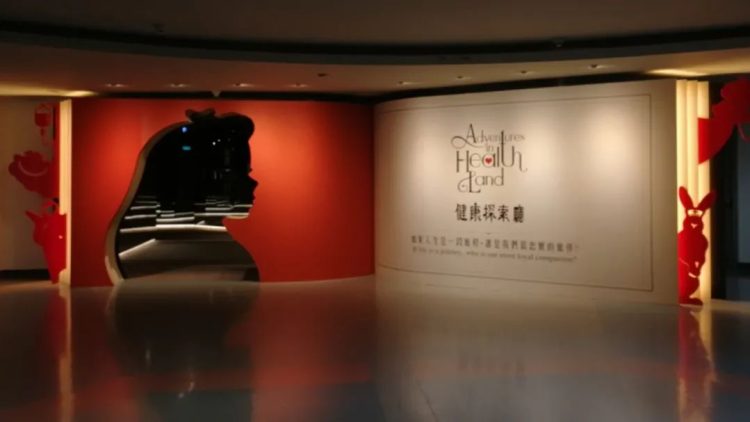
The entrance was designed like an open book. The entire hall was structured around the narrative of Alice’s Adventures in Wonderland. The exhibition design was intricately linked to the story, creating a dreamlike adventure scene while using metaphors to transform characters like Alice, the White Rabbit, the Cheshire Cat, the Queen of Hearts, and the card soldiers into themes for various exhibits. The Queen of Hearts represented stress syndromes, while the card soldiers’ placards listed Taiwan’s top ten causes of death in recent years… My mindset shifted from learning content to marveling at the ingenious design and connections, all while enjoying the hands-on exhibits.
V. Sketching Kaohsiung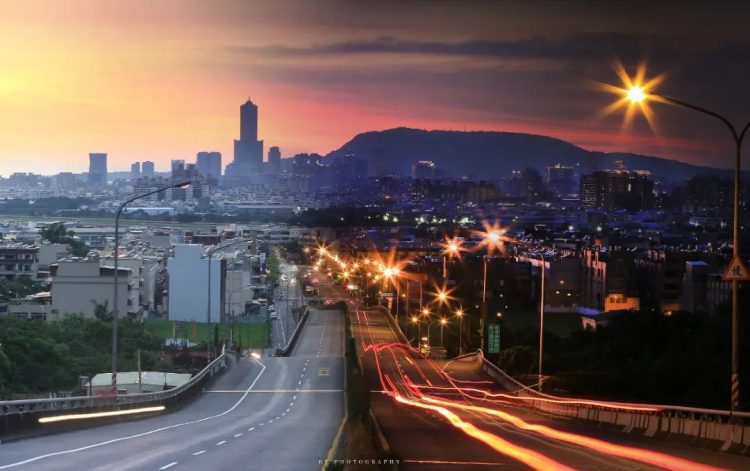
At the National Science and Technology Museum, I truly understood “edutainment” and discovered that a museum could be both visually appealing and fun. “Visually appealing” wasn’t just about the exhibits themselves, but the design sense and aesthetic value of the halls, where you could feel the creators’ cleverness and cultural depth. “Edutainment” meant the museum shifted from “Do Not Touch” to “Please Touch,” using simulations, scenarios, and simple interactions to let visitors learn by doing, leaving with the impression that it was all “fascinating.”
Through this window, I tried to sketch an image of Kaohsiung: a backdrop of advanced industry adding a certain starkness, tempering the warmth of traditional culture. Yet, you could detect a lively rhythm in the details of its technological pulse, like the brilliant dome of the Formosa Boulevard MRT Station or the strings of red lanterns at the Liouhe Tourist Night Market.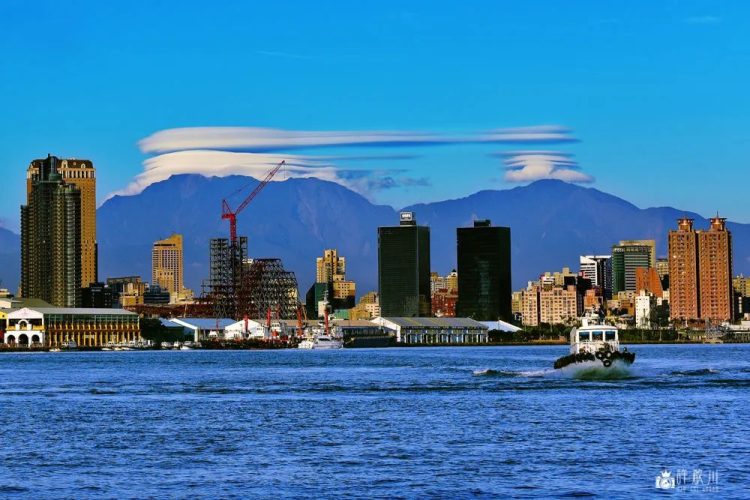
Continuing north, we cycled past rows of skyscrapers toward our next destination, Taichung. Moving through the hustle and bustle of traffic, we eventually reached a weathered village where we discovered the most vibrant colors.
VI. The Legacy of the Juancun
Juancun, or “military dependents’ villages,” are not villages in the traditional sense, but products of a specific era.
In 1949, large numbers of people—soldiers, their families, students, and others—relocated to Taiwan with the Republic of China government. To house military personnel and their families, the authorities provided planned settlements. Those who couldn’t live in barracks were temporarily housed in schools, temples, farmhouses, or even cattle sheds.
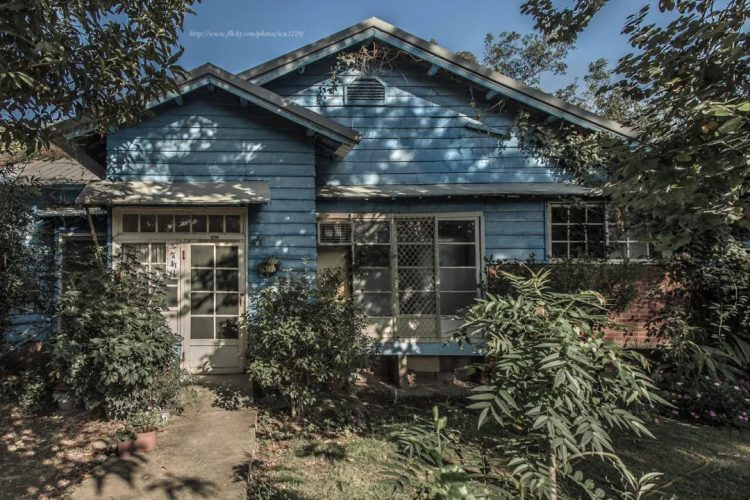
These displaced people built temporary shelters from bamboo, mud bricks, and thatch. Inside the bamboo fences of the juancun was a microcosm of the “lost mainland,” a place of diverse dialects and mutual support.
Outside the bamboo fences was another Taiwan. The juancun, a fading, unique social fabric, blended the sorrow of displacement with the rhythms of a life filled with both hardship and joy, reflecting the trajectory of a changing era, all coalescing into vivid collective memories. And the lingering sadness within these memories is named nostalgia. A narrow strait held back so many yearnings that remained just out of reach.
Today, though most juancun have declined from their former state, their influence is undeniable.
VII. Stories of Time
“When you pass by, don’t be surprised. The first house in the backyard, seriously practicing weightlifting, is indeed… Li Liqun… Apart from his breathing, he made no noise, so he didn’t disturb Gao Xijun studying under the lamp next door, or Chen Changwen, Jin Weichun, and Zhao Shaokang across the way…
We passed quietly. These families were more interesting. The one wearing a go-go outfit practicing English songs was Ouyang Feifei. Sixteen years old but already with a great figure, she was still unsatisfied, hoping to be as tall as Bai Jiali next door…”
Speaking of juancun, one must mention the notable figures who emerged from them. Besides those mentioned by Chu Tien-hsin in her writing, there are many familiar names: film masters Edward Yang and Hou Hsiao-hsien; cultural figures Lung Ying-tai, Chang Ta-chun, and Chu Tien-wen; television pioneer Wang Weizhong; iconic beauties Brigitte Lin and Hu Yinmeng; and the legendary songstress Teresa Teng, all came from juancun.
They emerged like butterflies, taking flight in their respective skies, amazing the world.
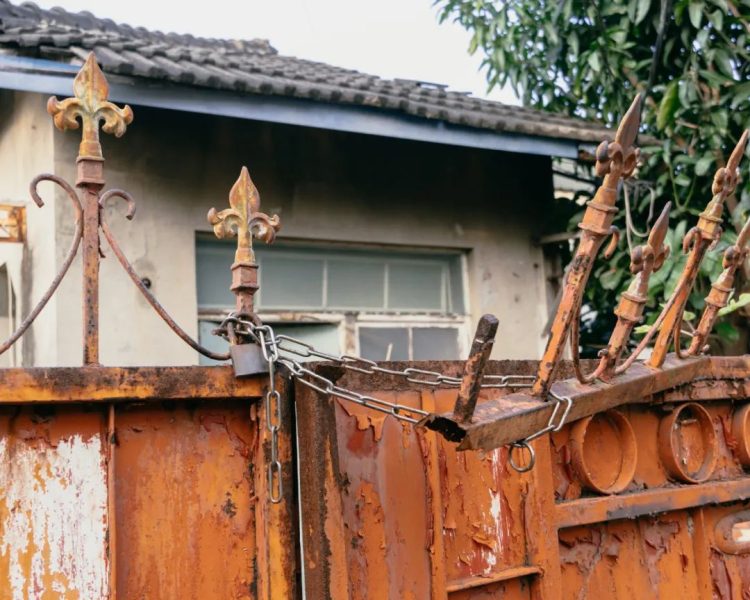
In literature and film, the term juancun has acquired different connotations over time. Initially, juancun themes appeared sporadically in newspaper supplements or as character backgrounds—”the juancun in literature.” As second-generation juancun writers emerged, literature explicitly themed around these communities slowly appeared.
These children of the juancun, straddling vastly different life situations and era atmospheres, were caught between their elders’ beliefs and their own urge to break out of the village fences to create something new. The contradiction and uncertainty in their hearts, no less intense than their parents’ wartime struggles, transformed into powerful words.
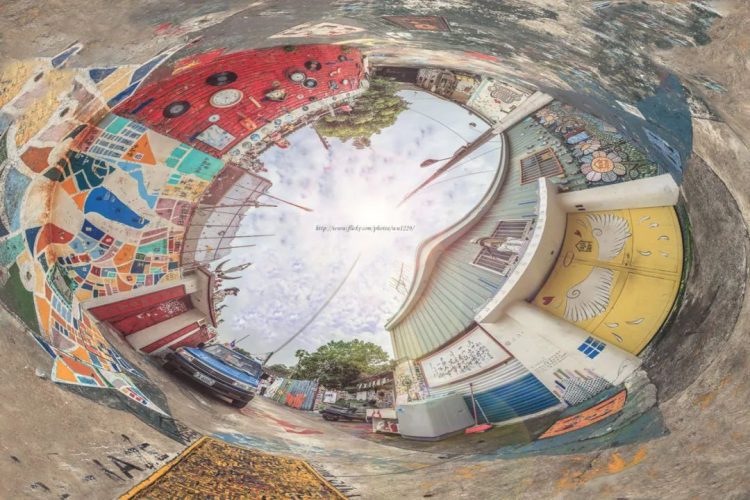
In recent years, Taiwanese juancun have increasingly become a cultural symbol. To preserve the joys, sorrows, and stories of ordinary people from that unique era, many artistic works focusing on juancun have gained attention.
The stage play The Village, created by Wang Weizhong and Stan Lai, tells the story of soldiers who came to Taiwan with the Kuomintang and their lives in the juancun. Other works like the TV series The Story of Time and Days We Stared at the Sun have helped people on the mainland understand this place created by compatriots far from their ancestral homes.
VIII. The Colors of the Rainbow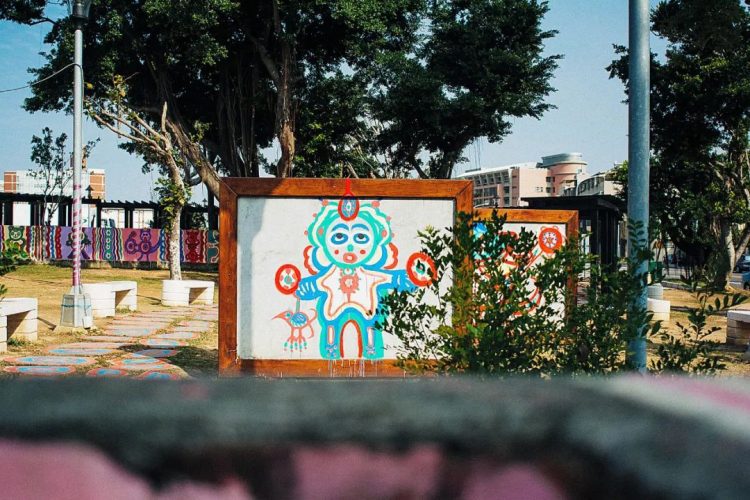
Arriving in Taichung, we stepped into an existing juancun with myriad thoughts, only to find it completely different from our expectations.
This village, named “Gancheng Sixth Village,” is known as the “Rainbow Village.” Stepping inside, a surge of vitality greeted us. Walking down the several-dozen-meter-long lane from the entrance, we were instantly captivated by the painted walls. Further in, more paintings in bright, passionate colors appeared. The ground, painted with a red base, featured outlines of birds, chicks, and rabbits in white and yellow. The walls were divided into sections, with backgrounds of blue, white, or yellow, adorned with hundreds of cartoon-style monkeys, cats, and children. Red, yellow, blue, green, white—the riot of colors and wildly imaginative lines made us feel as if we had stepped into a fairy-tale world.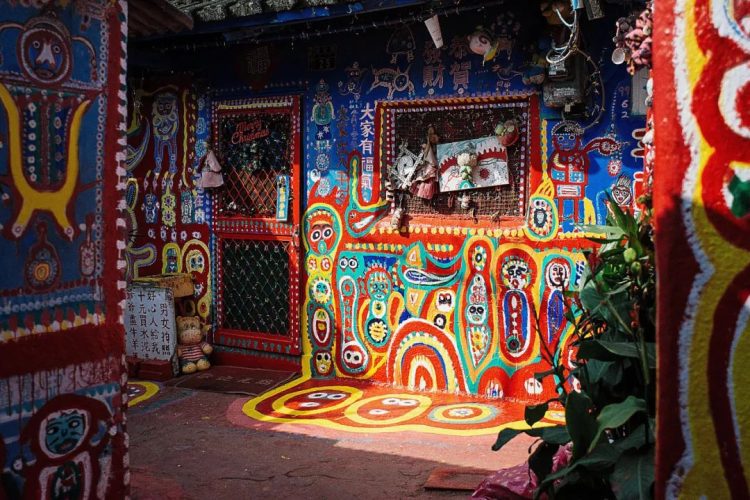
Some walls bore not only paintings but also heartfelt messages: “Smooth Work,” “Success in All Things,” “As Beautiful as a Flower”… We took photos delightedly. The bright sunshine that day made the light and colors perfect for pictures. Pausing between shutter clicks, looking at the playful rabbits, chicks, monkeys, birds, cartoon characters, flowers, sun, and rainbows, I initially assumed the artist was a group of innocent and adorable children.
In reality, the person who first picked up the brush was a retired veteran in his eighties.
IX. The Power of Paint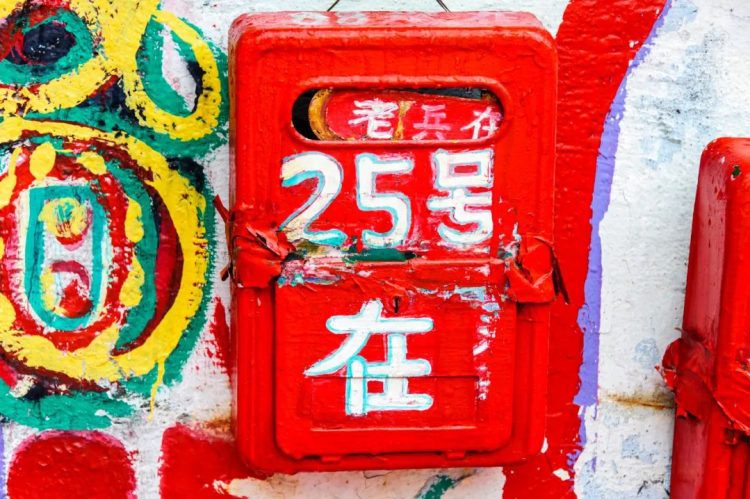
Huang Yung-fu was born in Hong Kong in 1924. He enlisted in 1949 and arrived in Taiwan with the government forces in 1950, eventually settling in the Chun’An Community (Gancheng Six Village) in Taichung. At 86, Huang began painting to pass the time, depicting things he liked in a childlike style.
Initially, the elderly man painted around his own home. Neighbors passing by were drawn to the innocent paintings and invited him to paint for them. Asked about his inspiration, he said it came from dreams: “Whenever I dream of something, I quickly paint it. When you’re old, your memory is bad; I’m afraid I’ll forget. These paintings are mostly things I’ve seen in my dreams…”
Using the village’s lanes and walls as his canvas, Huang recreated his dreams. Countless rainbow lines and cute animals transformed the dilapidated juancun into a vibrant and colorful fairy-tale world. These paintings changed the landscape of a village, blooming with resilient beauty like wildflowers in a desert, adding surprise to the often monotonous modern city.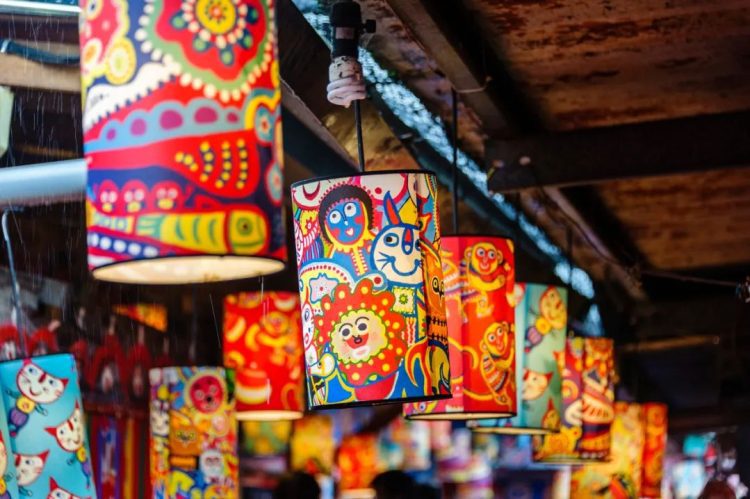
The old man’s childlike heart helped Rainbow Village resist the ravages of time, becoming a haven for adults and children alike. When the village faced demolition, many rallied to protect it—to protect the paintings, and perhaps a sense of purity, perseverance, and a symbol of an era. The “rainbow” of Rainbow Village is more than just the colors on the walls and ground; it is a state of heart.
In the end, thanks to Huang Yung-fu’s persistent painting, the once-derelict village slated for demolition grew increasingly popular. It was preserved by the local government and turned into a free public art park. Countless visitors come to see it, take photos, and buy a postcard or a rainbow popsicle. The story of Rainbow Village stands as a prime example of urban planning coexisting with cultural heritage. The power to change and create a place’s history had quietly manifested through one individual.
X. From Tainan to the Present
From Tainan onward, it felt as if we were moving forward along the thread of historical development. Chikan Tower, with its ancient charm, witnessed the conflicts of the Ming era. The global Industrial Revolution reached Kaohsiung, turning the page to a modern chapter. The monumental changes of the mid-20th century created waves that pushed boats across the strait, carrying decades of nostalgia.
On the stage set by geography, history has played out dramatically. From nations and provinces down to a single village, or one person, all are participants, ultimately revealing the present moment in which we exist.


