

I. Night Ride
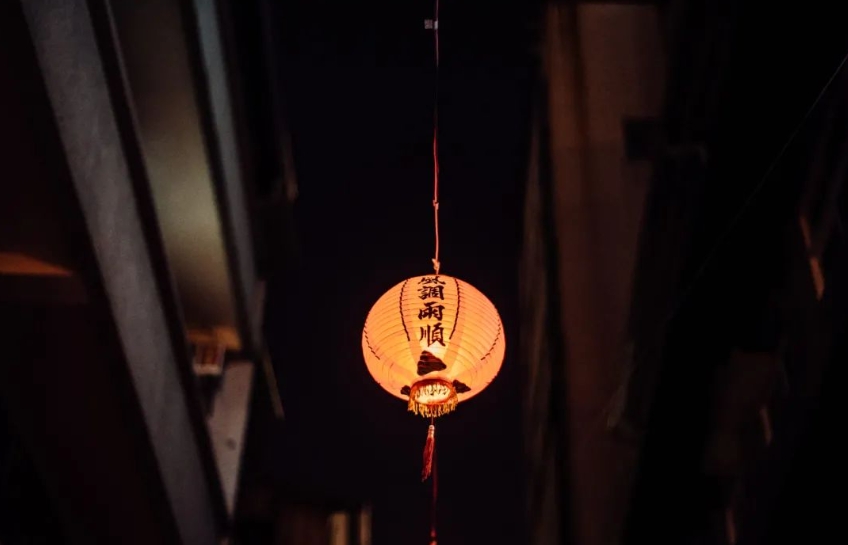
Our journey through eastern Taiwan concluded at Taitung Station, where we loaded our bikes onto a train for a direct ride to Kaohsiung, Taiwan’s second-largest city. After exploring the Liuhe Night Market that evening and visiting the National Science and Technology Museum the next day, we continued our journey by bike toward our next destination: Tainan.
Cycling at night offered relief from the relentless sun, eliminating worries about sunburn. However, the disadvantages were far more significant, primarily concerning safety. The shortcut we took to save time was poorly lit, relying entirely on the flashlight mounted on my handlebars to see the road ahead. Surrounded by near-total darkness and an uncertain path, our leisurely mood vanished. We moved with caution, too nervous to speed up on the unfamiliar road. A wave of relief washed over us when the navigation finally announced our arrival in Tainan, accompanied by a silent vow never to attempt such a risky ride again.
We then fell into the familiar routine of arriving in a new city: navigating the grid of urban streets, finding our pre-booked guesthouse, and dropping off our luggage. A quick search for a nearby night market sent us back out the door in search of food.
We had only walked a few dozen meters when we saw an unusually brilliant glow emanating from a nearby street. Exchanging a glance, my friend and I headed toward the light and stumbled into a spectacle usually reserved for the Lunar New Year.
II. The Fucheng Puji Lantern Festival
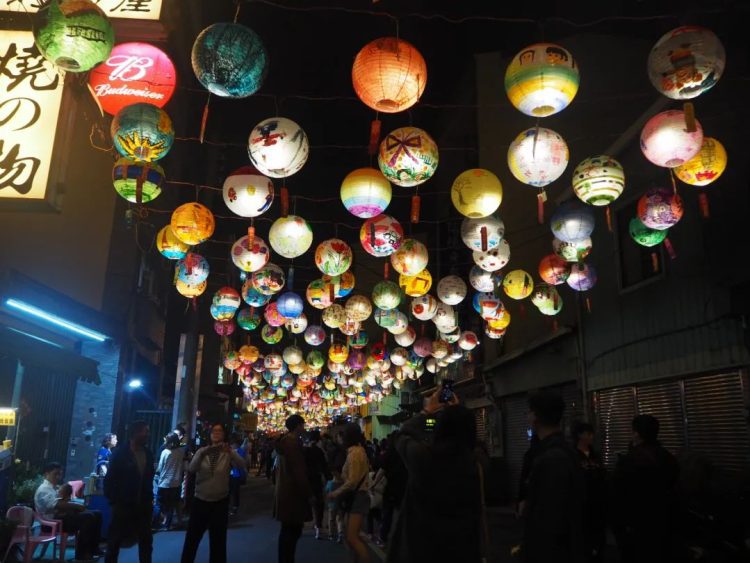
Located in Tainan’s Central and Western District, Puji Temple was built during the Ming dynasty and is dedicated to Guanyin Bodhisattva and Lord Chifu. It holds the distinction of being Taiwan’s oldest temple dedicated to a “Wangye” (a class of guardian deities). Having weathered centuries and undergone numerous reconstructions, it retains a distinct, classical charm.
In 2012, the temple grounds were illuminated for the first time for a “Lantern Painting Competition.” The event’s reputation grew over the years, eventually being voted by netizens as one of the “Must-See Lantern Festivals in Taiwan for Chinese New Year.” The annual festival, held from the New Year through the Lantern Festival, now serves as a grand display of the competition’s entries. Participants of all ages translate their personal stories into thousands of vibrantly colored lanterns. As night falls, this sea of creative lights adorns the temple square and the surrounding alleys.
Walking through the display, surrounded by bustling crowds and radiant energy, the atmosphere felt vibrant but not overwhelming. It was like passing through a corridor bridging time and space, leaving behind the untamed wilderness of Taitung and stepping into the timeless, historic world of Tainan.
III. A Glimpse into History Through Lanterns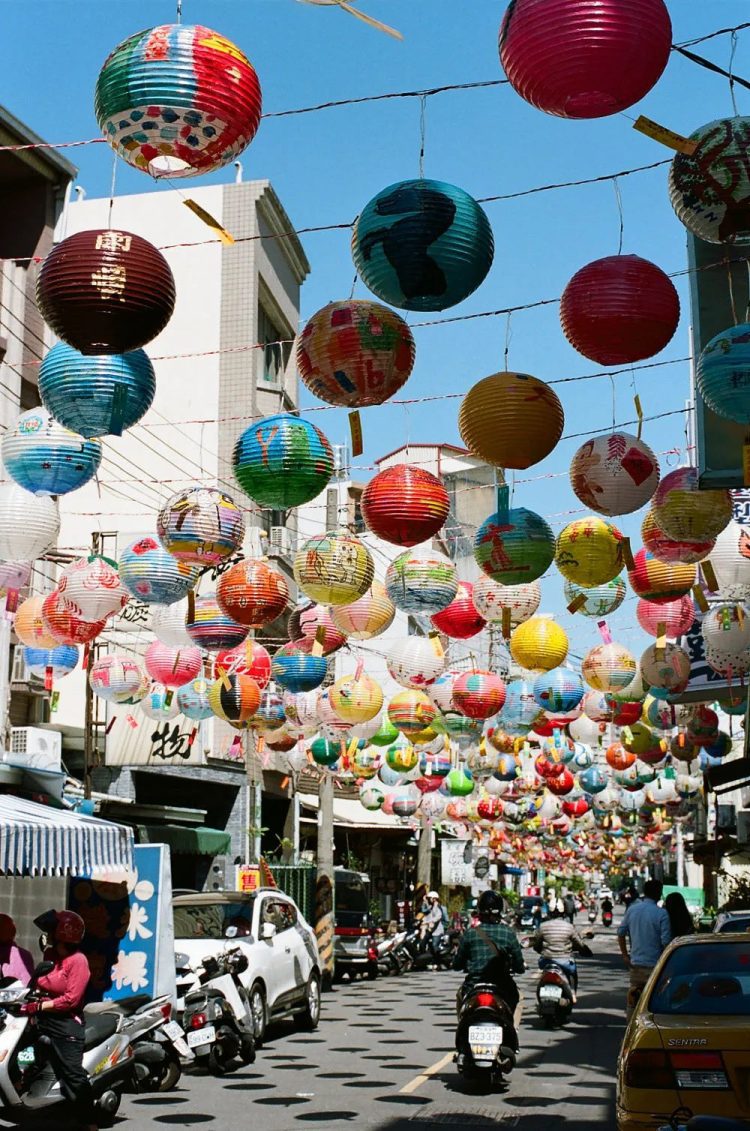
The concept of a lantern market isn’t a modern invention; it has ancient roots. The tradition of displaying lanterns on the 15th night of the first lunar month began in the Tang Dynasty. During the Song Dynasty, these festivals reached their peak scale and duration. Markets would spring up, filled with merchants and rare goods, attracting crowds who shopped and admired the displays. Literary figures also wandered these festive scenes, often transforming their complex emotions into timeless poetry.
For Xin Qiji, the lantern market was a place of dazzling extravagance, yet he searched through the crowds for just one person. For Ouyang Xiu, it was a setting for romance that later became a reminder of loss. Today, walking under these brilliant lights a millennium later, the sights are naturally different, yet the sense of wonder connects us to those past wanderers.
IV. The Cradle of Taiwan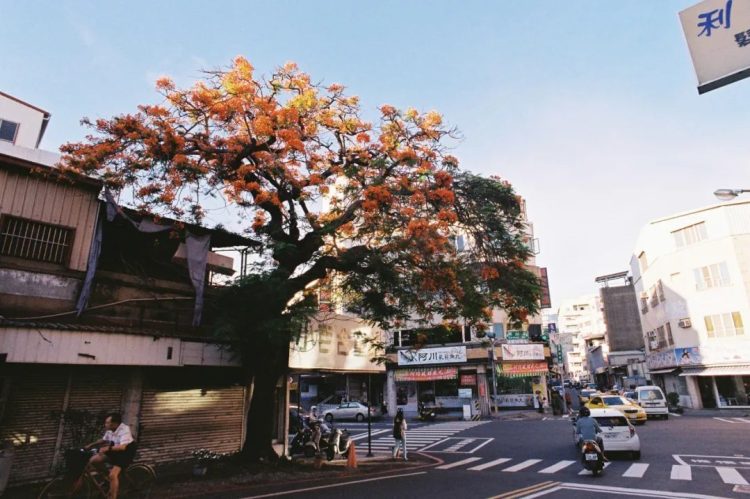
The Puji Lantern Festival focused primarily on the lantern displays, with few vendors. We saw pet owners lining up their dogs for photos and locals creating clever photo opportunities using mirrors to immerse visitors in the lights. Mostly, we looked up at the countless lanterns, admiring the colorful paintings on each one, feeling the unique vibrancy of human culture. The thousand scenes of Tainan proved no less spectacular than the myriad hues of nature.
This made us wonder: what feelings did people carry in their hearts when they stepped into these lantern markets centuries ago?
Tainan City is the birthplace of Taiwanese civilization. After Koxinga (Zheng Chenggong) expelled the Dutch in 1661, he established his administration in Tainan, encouraging cultivation and development. In 1683, the Qing dynasty made Tainan the prefectural capital of Taiwan. Even after Taiwan became a separate province in 1885, the city, renamed Tainan Prefecture, remained a political, economic, and cultural hub until the late 19th century. This long history earned it the title of “cultural ancient capital,” renowned across Taiwan for its abundance of historic sites.
The next day, we decided to pause our cycling and explore Tainan’s historical traces on foot. Our search for the past began with a visit to a single, iconic building.
V. The Story of Chikan Tower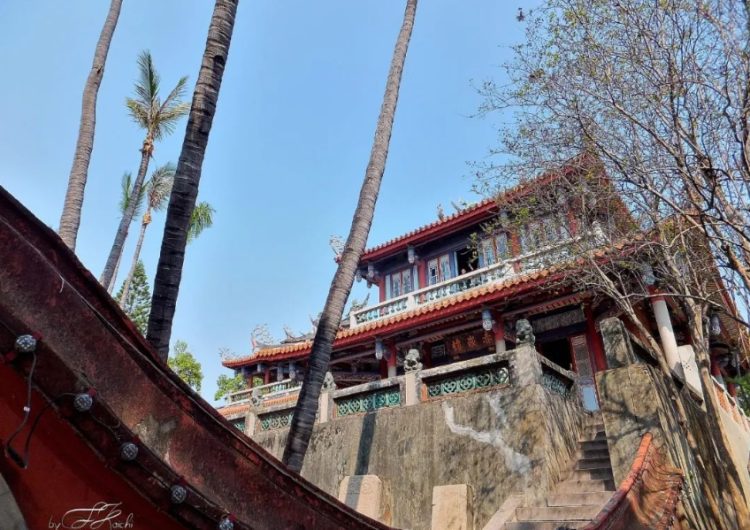
Chikan Tower was originally built by the Dutch and named Fort Provintia. It served as the administrative center of Tainan during the Dutch colonial period.
In 1661, Zheng Chenggong ended colonial dreams and reclaimed Taiwan. He designated Chikan Tower as the capital and renamed the fort, bringing the island firmly back under Chinese governance. After his early death, his descendants and advisors continued to develop Taiwan, improving agricultural techniques for indigenous tribes, promoting industry and trade, and introducing the imperial examination system, even building the Confucius Temple in Tainan.
In those days, before the Taijiang Inner Sea silted up, one could watch the waves of the East China Sea roll right up to the base of the tower at sunset, a scene celebrated as one of the “Eight Scenic Views of Taiwan.”
In 1874, official Shen Baozhen was dispatched to confront Japanese aggression. After an unexpectedly smooth sea voyage, he attributed his safe passage to divine protection and petitioned the emperor to build a Sea God Temple on the site.
That Sea God Temple now houses a museum displaying historical artifacts related to Chikan Tower. The figures are long gone, but we are fortunate that this building, surviving through tumultuous times, remains for later generations to visit and reflect upon.
VI. Visiting Chikan Tower
We visited on a brilliantly sunny day, a far cry from the dark clouds of its storied past. The grounds are compact but rich with things to see.
We followed the signs through the gardens, past a row of stone bixi turtles carrying imperial steles, the remnants of the old fort, the Wenchang Pavilion, and the “Red-Hair Well.” Climbing the wooden stairs to the second floor of the Sea God Temple, we looked out over the orange roof tiles and the old streets of the neighborhood. The Dutch, Japanese, and Qing… European maritime culture, a fusion of Eastern and Western influences, and ancient Chinese civilization all took their turn here, each leaving marks of their passage and proof of their possession.
Yet architecture is merely a symbol of culture. If the culture itself isn’t embraced by the land, even the most ornate structures will eventually crumble into ruins. But Chikan Tower did not.
Having been repaired and renovated multiple times over the centuries, its architecture is now a fusion of styles from different eras—a mixture of the Fort Provintia ruins, the Sea God Temple, and the Wenchang Pavilion. It once commanded authority over the entire island, witnessing the transfer of power, the vicissitudes of history, and the clash and fusion of Eastern and Western civilizations. Every brick and tile tells a story, embodying the nation’s triumphs and defeats.
Amid our historical reflections, my friend and I stumbled upon a playful modern twist. Two banners advertised unique “Tainan Historical Site Specialties”: “Success Beer,” featuring a portrait of Zheng Chenggong holding a beer can with the slogan “The Taste of Success,” and “Supreme Snack Noodles,” packaged with a quote from Confucius urging students to “study harder.” We couldn’t help but smile. The weighty figures of past wars and sages seemed to leap from the history books, crossing the dusty years to become unique cultural symbols, infused with new life through local pride and spirit.
VII. Tainan’s Old Streets: A Cinema Once Frequented by Ang Lee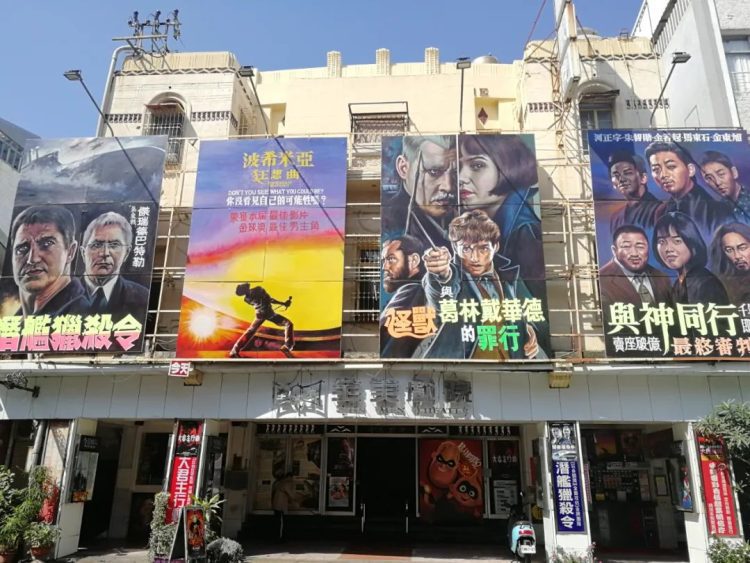
We spent our daytime hours in Tainan slowing our pace, immersing ourselves in the bustling old streets and exploring the historic buildings scattered throughout. We passed the Chuanmei Theater, nearly missing it until a hand-painted poster caught my friend’s eye. This is the theater where director Ang Lee first fell in love with cinema, and it remains the last old-school theater in Taiwan still using hand-painted movie posters.
The current owner continues to run the business, likely fueled by nostalgia. But public memory is short, and even with Ang Lee as its claim to fame and retro charm as its theme, the theater struggles to hold onto its audience. As hurried travelers ourselves, we hesitated at the entrance for a long time but ultimately couldn’t commit two hours to a film. Walking away, a sense of melancholy lingered—perhaps from regret, from witnessing the decline of a cultural institution, or from the fading of an era that feels increasingly out of reach.
VIII. Tainan’s Old Streets: An Exhibition Teeming with Ghosts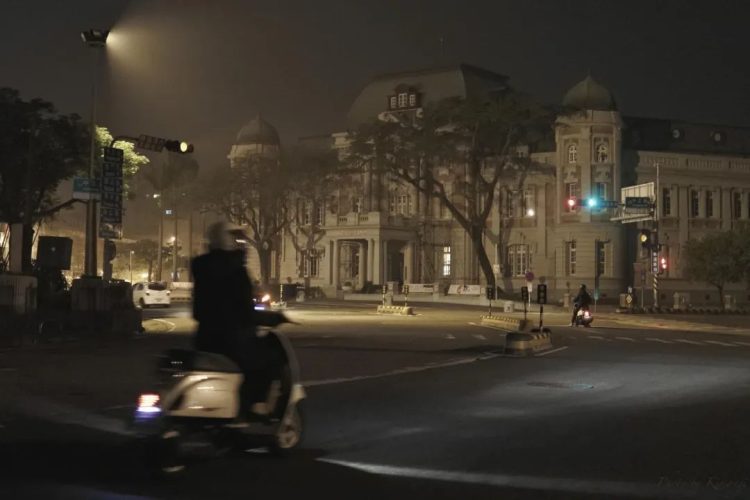
In our modern world of fleeting digital information, one ancient vessel for preserving stories remains: the written word. Yet, in an age of dazzling distractions, people are reading fewer physical books, gradually abandoning the textual worlds built from black ink on white paper.
In Tainan, we discovered a wonderful example of “adaptive reuse”: the National Museum of Taiwan Literature, housed in the former Tainan City Government building from the Japanese colonial era. It gives an old structure a new soul. During our visit, the museum was hosting the “Phantom Island: Tales of Taiwanese Monsters and Ghosts” exhibition, which reconstructed texts in a new form, giving words fresh life. The exhibition categorized different types of ghosts and monsters—those from the water, the forest, child-snatchers, man-eaters. Through sound, and interactive elements, these mythical beings from平面 descriptions were brought to life as images and animations, given form and motion, stepping out of the books to stand beside the viewers. Behind each creature, like the Tiger Aunt or the Lin Tou Woman, often lay a tale of sorrow and unresolved grievance.
Beyond the popular appeal, the exhibition maintained literary seriousness, analyzing the sociological and psychological origins of these entities. It concluded by highlighting their significance: these stories offer a window into the culture, living conditions, and collective memory of early inhabitants. The exhibition skillfully blended entertainment with education, offering fun for children and food for thought for adults. It was a wonderfully vivid experience and, perhaps unintentionally, a potential seed for future reading.
Outside the museum, the city traffic buzzed, but inside, books created a sanctuary. Visitors seemed to shed their restlessness, patiently reading and feeling, rediscovering the charm of the printed word—another form of tracing the past.
IX. Year After Year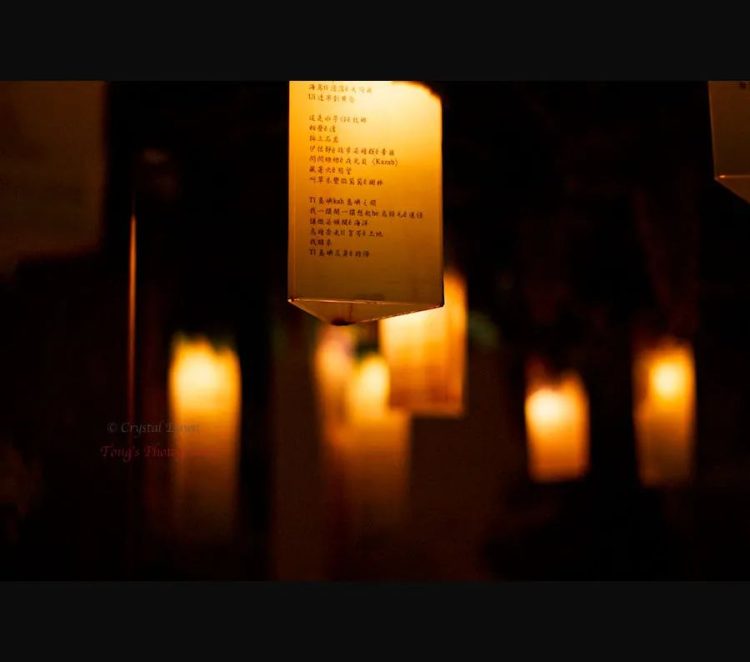
Before we knew it, the sun was setting, and closing time forced us to leave, however reluctantly. Stepping outside, we discovered another thoughtful detail on the museum’s stone fence: a “Taiwanese Women Writers’ Poetry Exhibition” in miniature.
My friend and I walked along the street, gathering lines of poetry etched in stone. We read a poem by Shi Zhongying, “The Young Knight,” and reflected that literary talent and heroic spirit know no gender.
Immersed in Tainan’s old streets, we let our thoughts wander in the twilight, reflecting on the day’s discoveries. We wondered if, in the 21st-century night, a lingering spirit might still listen for the tide atop Chikan Tower, gazing west across the strait at the eternal moon, mourning a bygone era of formidable power.


