
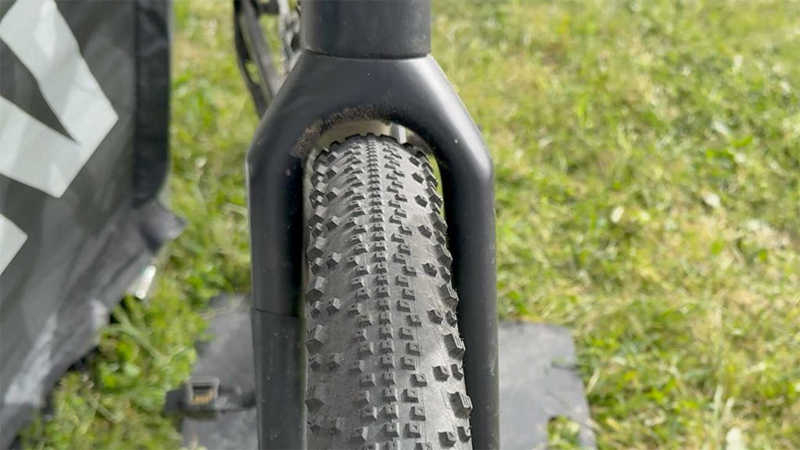

A growing trend among professional gravel riders involves using mountain bike tires as wide as 57mm—far exceeding most manufacturers’ recommended limits. While this setup may deliver performance advantages in competition, it poses potential risks for riders who fund their own equipment and prioritize long-term frame durability and safety.
The Shift Toward Wider Tires
Not long ago, gravel bike evolution was relatively conservative—minor geometry tweaks, incremental component upgrades, and integrated design refinements. But tire standards have shifted dramatically in recent months. The former race standard of 40–42mm is now a thing of the past, as many pros have adopted widths above 50mm, sometimes reaching 57mm—sizes traditionally associated with mountain biking.
This shift isn’t arbitrary. Testing across varied surfaces—from smooth pavement to loose gravel—has shown that some lightweight XC mountain bike tires can offer lower rolling resistance and better puncture protection than dedicated gravel tires. The Maxxis Aspen ST, for example, has become a top choice among pro riders using that brand. As a result, maximizing tire volume has become a common strategy for riders chasing every possible performance gain.
Ignoring Manufacturer Limits Comes with Risks
The problem lies in bypassing the safety margins set by bicycle manufacturers. Most gravel frames on the market are designed to safely accommodate tires no wider than 45–47mm. These limits are not arbitrary: engineers account for factors like tire clearance, chainstay and fork contact risks, mud buildup during wet conditions, and wheel flex under load.
Professional riders, however, operate under different constraints. Their bikes are built for high-intensity, short-term use and can tolerate paint scratches or minor frame abrasion—winning is the primary goal. If a technical choice offers a performance benefit, they may accept the risk of compromising frame integrity.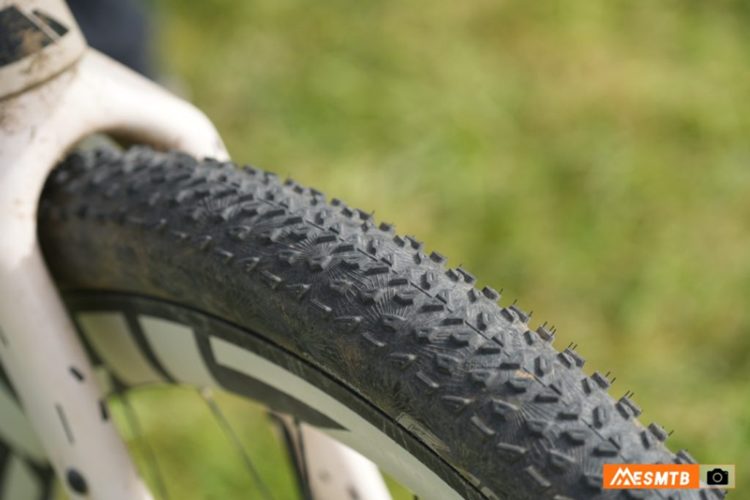
A Dangerous Misconception
When pros deviate from manufacturer guidelines, it can create a dangerous perception. Many amateur riders see their idols using wider tires and follow suit without realizing that installing a 2.1-inch (approximately 53mm) tire on a frame designed for 45mm can lead to serious consequences: constant rubbing noises, accelerated wear on carbon frames, or in the worst case, structural failure. It’s also important to note that any damage caused by exceeding tire clearance limits will void the manufacturer’s warranty.
One key principle to remember: just because a tire spins freely during a static test doesn’t mean it’s safe under real-world conditions. During actual riding, tires deform, wheels flex, and frames endure stress—what seems like a “tight fit” in the stand can become a serious hazard on the trail.
A Rational Approach to Experimenting with Wider Tires
Does this mean you should never try a wider tire? Not necessarily—if you fully understand the risks, accept potential frame damage, and are willing to forfeit warranty coverage, you may proceed with caution. However, the safest approach remains adhering to the manufacturer’s specifications—those numbers exist for a reason.
Ultimately, a gravel bike is a compromise between a road bike and a mountain bike. Its frame isn’t built to the same robustness standards as a mountain bike, and most riders don’t require pro-level performance. While it may be tempting to imitate elite riders, it’s worth considering: is saving a few seconds on a Strava segment worth sacrificing the longevity of a bike that costs thousands of dollars?
We’re confident that future gravel bike models will increasingly offer larger tire clearances. But until then—unless your income depends on race prizes—sticking to the manufacturer’s stated tire limits remains the wise choice.


