

I. Freedom
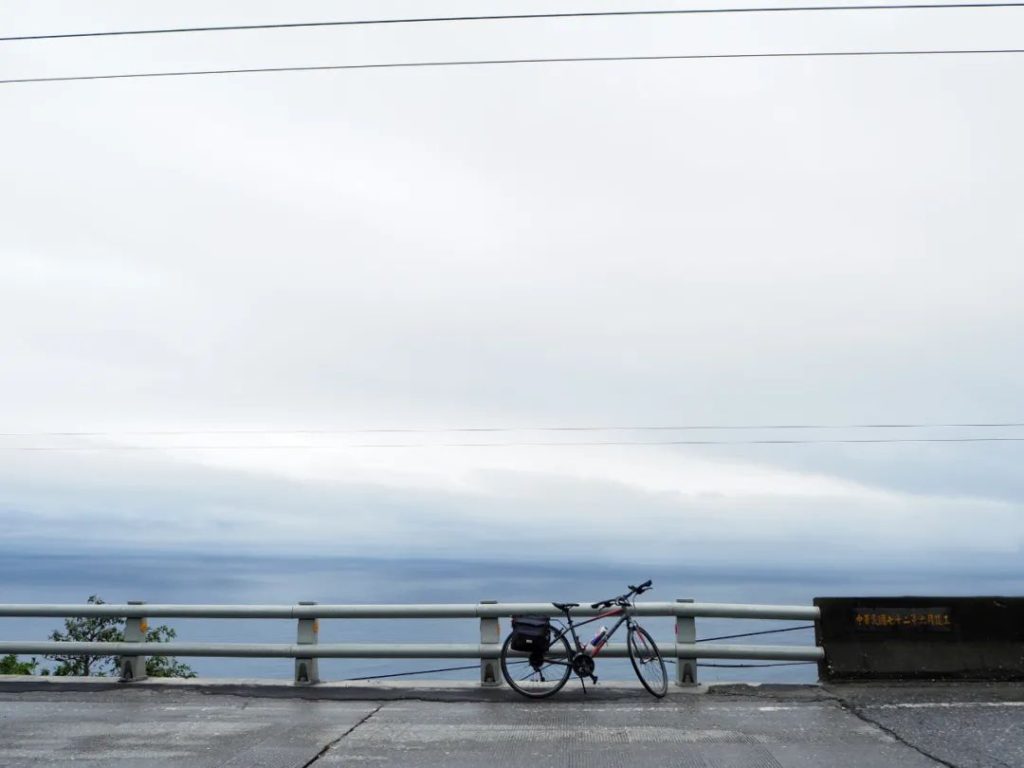
What I felt most deeply while cycling in Taiwan was a sense of freedom. Body and mind, long confined by work, were completely released during a short two-week holiday. This manifested both in the continual lightening of my physical load and the relief of leaving complicated social ties behind. At Taipei’s airport, I swapped my SIM card for a local number—unlimited data for fifteen days—which would accompany me for the entire journey.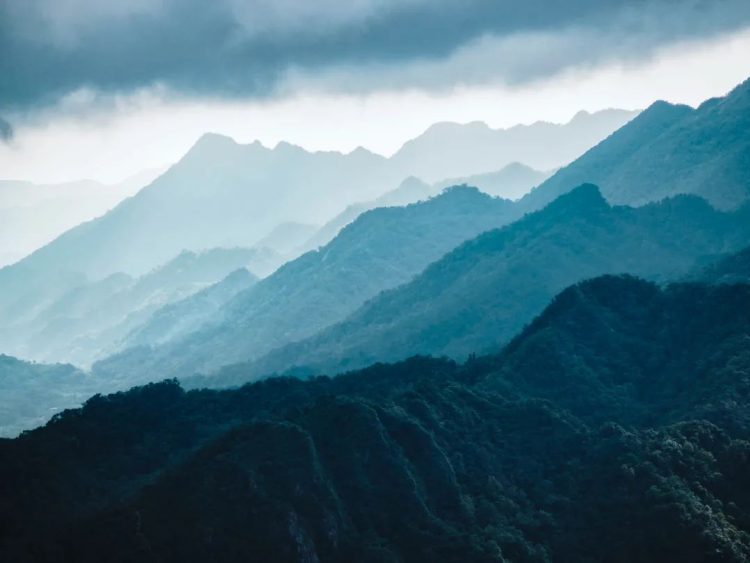
My phone was used mostly for navigation, music, and ride tracking. The screen lit up briefly only when I was lost, wanted to change a song, or paused for a break. My suitcase stayed behind at the Taipei hostel where I rented the bike. All my essentials fit into two panniers on the rear rack and a backpack. Fancy clothes for photos in the city were left behind, replaced by simple T-shirts and shorts. Even when I saw beautiful souvenirs, the thought of carrying them for hundreds of kilometers instantly dissolved any desire to buy.
II. Circumnavigation
That winter, we set off from Taipei, riding clockwise around the island. The trip took over ten days, with a few lazy train rides mixed into the itinerary, covering a total of 700 kilometers. I listened through my entire seemingly endless playlist twice. More often, we rode at our own pace. The roads varied endlessly, and the scenery alongside them was in constant flux. With a rhythm in my ears and my legs turning the pedals mechanically, my eyes greedily absorbed the fleeting landscapes, and my body keenly felt every present moment. They were unique, unrepeatable, and could never be experienced again.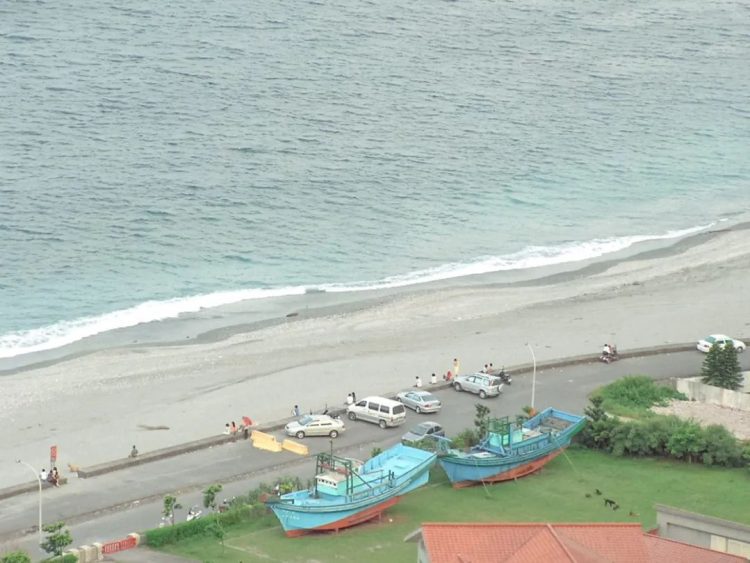
My travel companion was more carefree, but I still wanted to take something tangible home. I carried a stamp book, collecting dozens of different stamps. I justified it by telling myself “a few pieces of paper aren’t heavy,” and its pages steadily filled with tickets and brochures from sights along the way.
But in the end, it didn’t really matter. For me, the most precious gain from this trip was the experience itself—a memory of utter exhilaration and boundless freedom that remains vivid years later. We rode tired but happy, listening to the wind and getting soaked by rain, hearing the ocean waves and watching sunsets, embracing the freedom that rushed toward us and roared past.
III. East, South, North
Taiwan’s topography is high in the center and low on the coasts, dominated by three NE-SW mountain ranges in its center, with the Yushan Range being the longest. Plains are mostly in the west, some in the north. Beyond the Yilan Plain in the northeast, only a narrow coastline remains. Based on my ten-day ride, I subjectively categorized the regions we passed through into three parts: East, South, and North.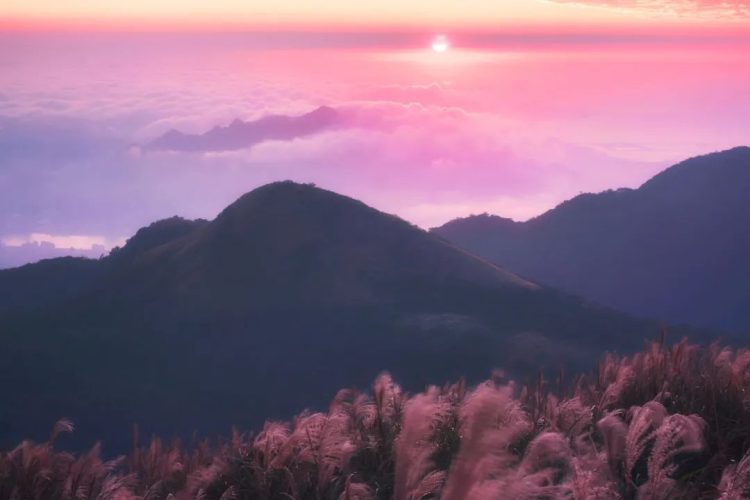
Eastern Taiwan, being mountainous, is less developed and retains more natural scenery. The South represents Taiwan’s past: a long history gives it a rich cultural heritage, evident in Tainan’s many historical sites, while Kaohsiung bears witness to the island’s modern industrial beginnings. The North, centered on Taipei and stretching from Keelung to Hsinchu, represents Taiwan’s present and future—a metropolitan belt that leveraged its geographical advantages for modern development.
IV. Us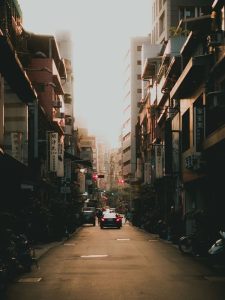
We started our escape from the city’s noise in Taipei, seeking companionship in nature and enjoying pure tranquility. After a few initially idyllic days, a sense of loneliness crept in, so we took a train to Kaohsiung, returning to the embrace of a modern city. No sooner had we warmed to its comforts than we grew restless again, so we cycled away, searching for a lost artistic sentiment in Tainan’s old streets and ancient architecture. Finally, rushing back to Taipei for a concert, the city’s main station at night was just as we had left it: cars flowing, crowds surging. Only time had moved on. But the days and nights spent speeding along on our bikes did not vanish without a trace like a receding tide; they left a bold, indelible stroke on the canvas of memory.
V. Along the Road, Into the Mountains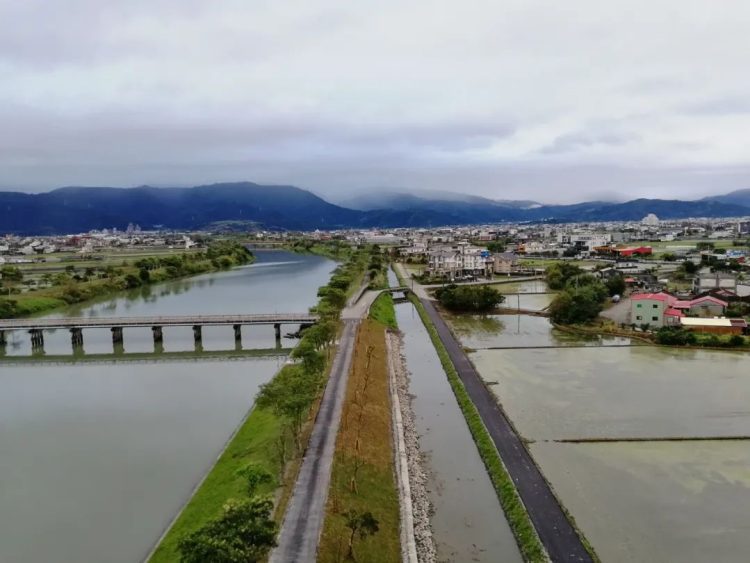
After breakfast in Keelung, the weather was overcast with a light drizzle. My friend and I put on rain gear and started the day’s ride. The road followed the coast, but the sea wind was too fierce. Checking Google Maps, we found an alternative route—a tunnel that seemed to bypass the coastal highway, though we were unsure if it was passable. After asking a local, we arrived at our first unplanned, serendipitous sight: the Fulong Old Caoling Tunnel.
VI. Through the Mountain: Fulong Old Caoling Tunnel
Trains no longer pass through here. After the new double-track New Caoling Tunnel opened in 1986, the Old Caoling Tunnel between Fulong Station and Shicheng Station on the Yilan Line was sealed and left abandoned for over two decades.
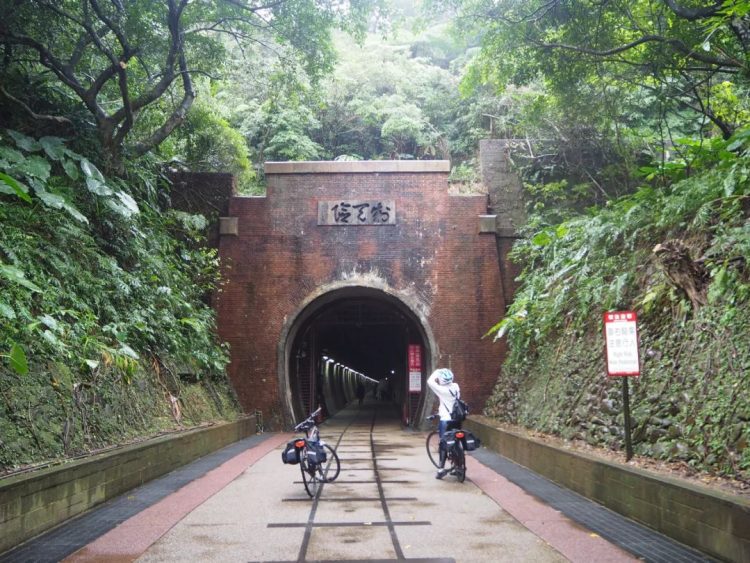
During the Japanese colonial era, this was Taiwan’s longest railway tunnel.
A monument stands north of the northern entrance, commemorating the site supervisor who died during its construction, a record of the human effort to improve Yilan’s transportation access a century ago. But bicycles can pass through now—with the passage of time, it has been transformed into the “Old Caoling Tunnel Bicycle Path,” combining history, culture, and tourism. The gravel-covered tracks are long gone, replaced by a cement path styled to resemble rails, a playful nod to its history.
We continued along this path, passing through lush forests on the mountainsides until a splash of unnatural red appeared. The tunnel is constructed entirely of red brick, with simple stone decorations atop the parapet walls at its entrance. It pierces through the mountain, using the solid rock to block the howling northeast monsoon wind, saving travelers the twists and turns of the winding coastline.
There weren’t many tourists that day due to the weather, just a few people walking in small groups. We cycled past them, ringing our bells; the clear sound echoed in the tunnel, adding a brief liveliness to the quiet. One by one, the incandescent lights and the illuminated information panels fell behind. A slight breeze rose inside the tunnel, a fragile whisper too faint to disturb the dust, yet it brushed through our hair and stirred our hearts. Just as the repeating scenery began to feel slightly monotonous, we reached the tunnel’s end. We stopped a few dozen meters out and looked back. The mountaintop above was hidden in mist and clouds; the humidity made the vegetation seem even more verdant. A tourist stood under an umbrella in front of an information board, gaze fixed, motionless within the frame of the scene.
VII. About Mountains
While passing through the tunnel, I truly felt I had left something behind in the unanswering depth, allowing the long silence to filter out the noise and clutter, steering us toward the tranquil greenery, toward the endless mountains of Eastern Taiwan. For the rest of the journey, the NE-SW running Central Mountain Range became a constant, silent companion, standing imposingly within sight.
In the past, mountains were insurmountable barriers. They blocked the paths of people, inspiring tales like the old man who moved mountains. People had to leave their secluded hometowns to seek livelihoods elsewhere. Now, we no longer gaze at them with fear, instead tunneling through them and winding roads around them, seeking solutions for transportation needs.
VIII. Mountains and Sea: The Suhua Highway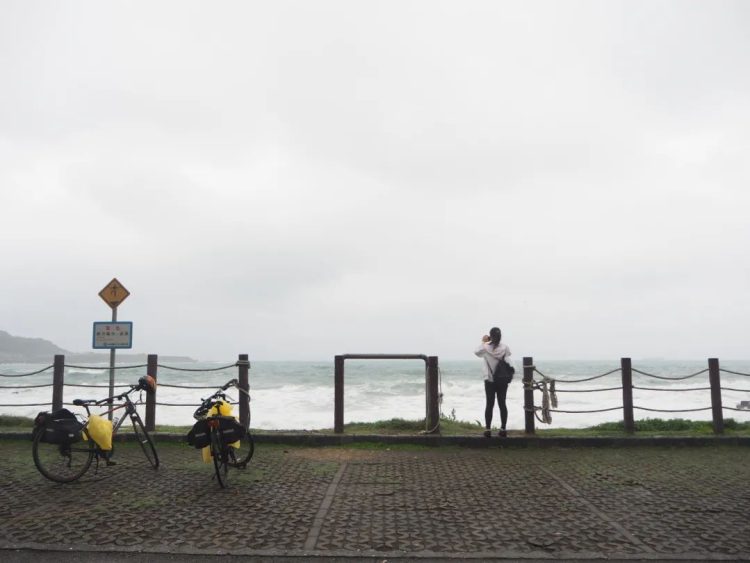
The mountainous east forces people to settle in the scarce low-lying plains, like Su’ao, Nan’ao, and Heping. Or they rely on the power of rivers, cultivating on fertile alluvial soil, developing and sustaining civilizations, like in Yilan and the Huadong Valley. But a road is always needed to connect these scattered towns.
On Taiwan’s east coast, there is such a north-south road—starting in Su’ao, Yilan, and ending in Hualien City, a 118-kilometer coastal route traversing several hills, known as the Suhua Highway. Originally part of a highway built during the Japanese colonial period, it was renamed and later improved with new tunnels and asphalt paving, opening for two-way traffic in 1990. It largely follows the coastline, carved into the western mountainsides. Its rugged terrain makes accidents frequent, and rain often brings rockfalls, leading to periodic closures.
But as the ancients said, “unlimited scenery is found atop perilous peaks.” To the east lies the boundless blue of the Pacific, a stunning landscape between mountain and sea, famous worldwide.
Waking at 5 a.m. the next day, the island was still shrouded in darkness. We hadn’t received any closure notice. Finding a convenience store for breakfast, we set off, both grateful and slightly regretful. My friend and I had no idea what a challenging journey lay ahead. The Suhua Highway, built along the mountains, has almost no flat sections. Right at the entrance, a long ascent greeted us. What started as slightly strenuous became exponentially harder with each successive climb. By the 9th kilometer, pushing my bike more than riding, the thought of giving up surfaced.
It was the Chinese New Year holiday, and the highway was unusually quiet. I gave up on another long slope, pushing my bike slowly, fighting my fatigue, fighting gravity. The only sound was my own heavy breathing. I started questioning everything—the meaning of travel, why the road wasn’t closed, why I hadn’t taken the train. I blamed myself for paying to suffer, for not choosing a bus or even the slowest local train to Hualien.
Small negative thoughts, amplified by physical exhaustion, grew endlessly… until I looked to my left.
Without realizing it, the vertical distance had stretched the landscape below. From this commanding height, I could see the layout of the houses and the coastline defining the island’s edge; the small town was laid out below. “When reaching the summit, all other mountains appear small” was the perfect description.
IX. The Cyclist’s State of Mind
I stopped to let the sea breeze dry my sweat and to take in the view. In that moment, I found a reason to keep going. The road was long, but the day was still young. Pushing through the agonizing 9th kilometer, the appearance of the 10km marker lifted my spirits. After another zigzagging gentle slope, the road ahead suddenly stretched out downward. I realized with a start—it was a descent! I got back on the saddle, pressed the pedals, and felt a long-lost lightness aided by the slope. The wind sang in my ears, restoring the ease worn away by the climbs. The wheels spun fast, requiring brakes on the sharp turns.
But I was reluctant to brake, unwilling to sacrifice the thrill of speed. My cycling app announced my speed and distance; time seemed to accelerate. Reaching the bottom of the slope took only the length of a song. Isn’t that how it is? If you endure the hardest part, where you feel you can’t go on, you will eventually be met by welcoming winds. The fatigue of cycling is something you can’t feel in a car; the cyclist’s state of mind is equally inaccessible to someone in a vehicle. Cars speed past in a blur; unless you ask the driver to stop, the scenery outside is fleeting. Cycling is completely different. At a slower pace, you feel the changes in terrain, the rise and fall of the mountains more intimately, granting a gentle, close connection with the earth.
Over 100 km of mountain road, three peaks totaling 800 meters of vertical climb, sharing narrow tunnels with roaring trucks. The zigzag highway wound around the cliffs, with steep stone drops beyond the guardrails and sea winds howling. Below the Qingshui Cliffs, waves crashed on the beach, the water a brilliant blue. If I hadn’t chosen to ride the Suhua Highway, I would have been spared much complaining, despair, and exhaustion. But to this day, I’m still glad I went.
X. Toward the Mountains: Mr. Brown Avenue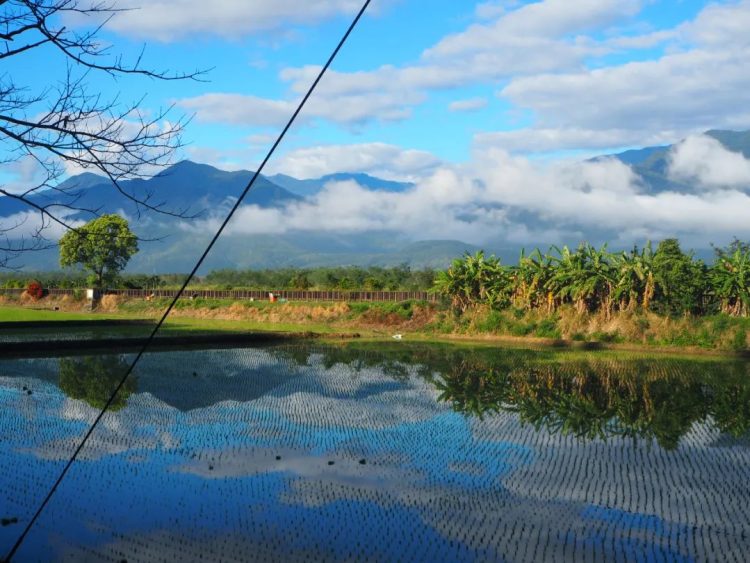
The section from Hualien to Taitung passes through the Huadong Valley. Compared to the Suhua Highway, its gentle rollers were a breeze. Here, the mountains are less demanding, and humans needn’t fight them; we coexisted in harmony.
During the ride, we took a detour to see the most stunning road of the entire trip: the east-west Mr. Brown Avenue.
At its end stood majestic, rolling mountains, dotted with a few clouds. On either side were paddies, vibrant green shoots immersed in water that reflected the blue sky and white clouds. It was an extreme, pure natural landscape, utterly unadorned yet breathtakingly beautiful.
The two-lane cement road starts from a noisy eastern village, passing country paths, wild grasslands, farmland, and houses at the foot of the hills, heading straight for the mountains. The road was nearly empty of people and vehicles. The absence of modern scenery left the stage entirely to nature, making the shadows of clouds on the ridges and the ripples stirred by the wind feel intensely vivid. Unburdened by schedules or distance, I cycled slowly, fully immersed in the fields around me, trying to engage all my senses to preserve what photos and words could not.
XI. First There Were Mountains, Then Came Roads
If mountains are natural barriers, then roads are the bonds that turn barriers into thoroughfares. They aren’t entirely natural, born from humanity’s primal stubbornness and resolve to cross impassable deserts, wilderness, mountains, deep valleys, and torrents. In the northwest, the Tarim Desert Highway cuts through the shifting Taklamakan, opening a route across the “Sea of Death,” enabling oil field development and building an economic bridge between northern and southern Xinjiang. On the Roof of the World, the Sichuan-Tibet and Qinghai-Tibet Highways, built against incredible odds, became vital lifelines, transporting goods and connecting Tibet to the rest of China. In the southeast, the 55-kilometer Hong Kong-Zhuhai-Macao Bridge, the “Everest” of bridges, links the Pearl River Delta cities like a necklace. In the southwestern mountains, the winding road from Yiliang to Jing’anshao in Yunnan, famously known for its “68 Bends,” carves its way along a mountain ridge.
The convenient transportation brought by these roads promotes tourism and has transformed the fate of impoverished mountain villages.
Mountains and roads are also a microcosm of the human-land relationship—passing through mountains, viewing the sea from their slopes, journeying toward them.
Initially, humans saw conquering nature as a glory. Later, we realized the two are not对立 (opposing forces); we cannot change everything by force but must adapt, using technology to ask for passage. Ultimately, we understand that the only sustainable relationship between humanity and nature is coexistence. Like my ride through Eastern Taiwan, using human-made passages to appreciate nature’s boundless charm, and rediscovering a sense of freedom along the way.


