


The Rise of a Pedal-Powered Economy
Bicycles are trending again across Chinese social media. What began with “citywalk” evolved into “cityride,” and now nighttime cycling adventures like “Night Riding in Kaifeng” are capturing public imagination. Despite concerns about road safety and bike maintenance, cycling maintains its popularity—transforming from an eco-friendly commute choice into a social lifestyle phenomenon.
This cultural shift reflects a broader market transformation. Data from the China Bicycle Association shows that in 2023, China produced 48.83 million bicycles, with 12.15 million priced above 1,000 RMB—representing 24.9% of total production and signaling a clear premiumization trend.
Industry leaders see substantial growth ahead. “We conservatively estimate China will have 100 million bicycle sports enthusiasts by 2029, with road bikes representing a significant portion—that’s a massive market opportunity,” stated Zhao Yuewu, Decathlon’s North Asia Road Bike Brand Director, during the 2024 China International Bicycle Fair.
The cycling economy extends far beyond bicycles themselves. Riding apparel, equipment, cycling clubs, and even secondhand bike markets are all benefiting from this boom. On Xiaohongshu, searches for “cycling routes,” “cycling gear,” and “cycling outfits” return tens of thousands of posts. Tmall reports cycling category sales grew 77.8% year-over-year from January to August 2024, with bicycles, riding wear, shoes, helmets, and glasses showing the strongest growth.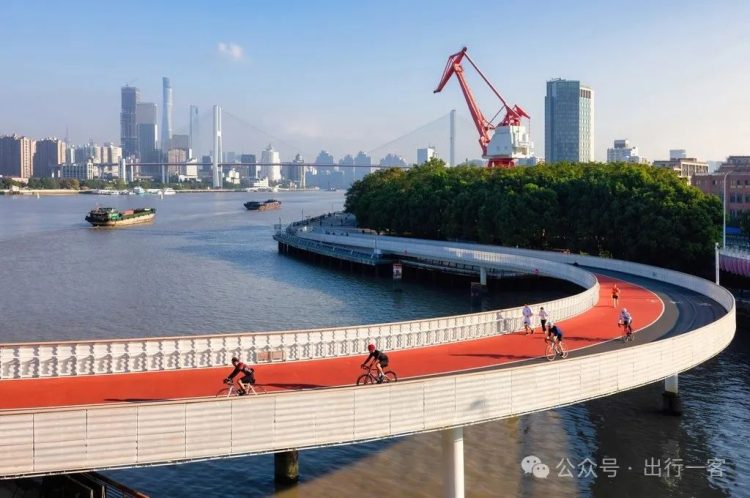
Export Momentum and Market Recovery
China’s bicycle industry demonstrates strong global reach, having developed three major manufacturing clusters around the Bohai Bay, Yangtze River Delta, and Pearl River Delta regions. These clusters support a complete industrial chain that handles approximately 60% of global trade volume.
After export fluctuations in recent years, the market shows clear recovery signs. From January to September 2024, China exported 36.05 million bicycles—a 20.4% increase over the same period last year. The global bicycle market is projected to grow from $56.16 billion in 2024 to $69 billion by 2029, representing a 4.20% compound annual growth rate.
European, Southeast Asian, African, and North American markets are particularly promising as environmental awareness and urban congestion make bicycles an increasingly attractive transportation alternative.
From Volume to Value: The Premium Shift
China’s bicycle industry is undergoing a fundamental strategic shift—from competing on price to competing on quality and innovation.
The number of bicycle-related enterprises in China has grown dramatically. Qichacha data shows registrations increased 110.6% in 2023 to 1.48 million companies—approximately 27 times the number recorded in 2014.
Despite the industry’s fragmentation, even established players like Shanghai Phoenix are seeing improved financial performance. Their latest earnings report shows revenue of 1.83 billion RMB in the first three quarters of 2024, up 42.96% year-over-year, with net profit reaching 50.16 million RMB—a 52.15% increase.
The shared bike phenomenon of 2016-2018 initially disrupted traditional manufacturers’ production rhythms and raised costs, but it also helped popularize cycling as a daily transportation option. Now, premiumization represents the industry’s new direction.
Decathlon’s global rebranding in March 2024, including a new logo and “North Star” strategy targeting higher-end, more professional segments like road cycling, exemplifies this trend. Similarly, Phoenix’s premium sports brand FNIX recently launched a League of Legends collaboration—the X777 Yasuo Edition—featuring game character artwork on bike frames to attract younger consumers.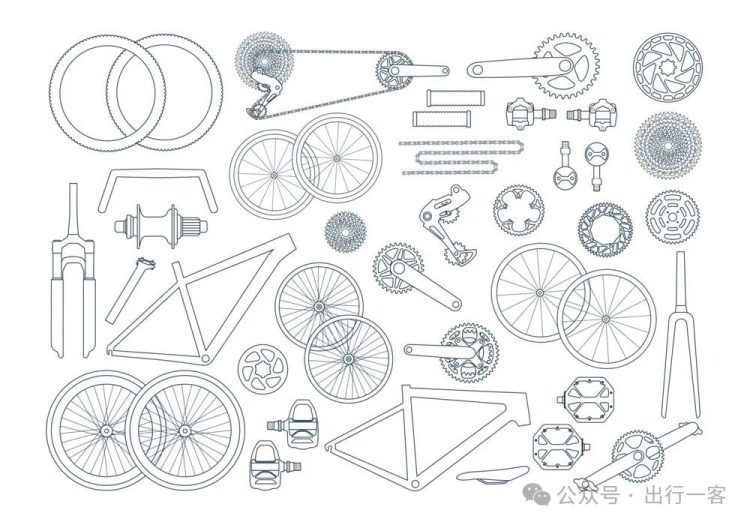
Innovation Challenges and Smart Transformation
The industry still faces significant technical hurdles, particularly in drivetrain technology. Most mid-to-high-end bicycles still use gear systems from American manufacturer SRAM or Japanese company Shimano, which boasts a century of history and thousands of patents.
“To outsiders, bicycle development might seem like minor adjustments to angles and parameters, but these subtle details represent the industry’s essence,” explained Xu Weiyao, Deputy General Manager of Shenzhen SL Health Product’s Business Division. “Understanding not just the ‘how’ but the ‘why’ is essential for building quality bicycles.”
Chinese manufacturers are increasing research investments to overcome these challenges. Shanghai Phoenix has maintained R&D spending around 20 million RMB annually since 2021—approximately half their yearly profit—with 15.6 million RMB invested in the first three quarters of 2024.
According to the “China Bicycle and E-bike Intelligent Development White Paper (2022 Edition),” the industry is characterized by shifting value chains, accelerated adoption of information technology, steady progress in smart manufacturing, and increasingly platform-based management. Continuous intelligent upgrades have become essential for manufacturers seeking transformation.
For Chinese bicycle companies aiming to move beyond competing on price, multiple factors align favorably: national policies encouraging low-carbon transportation, China’s substantial manufacturing infrastructure, and growing public interest in fitness and premium products. Success requires carefully balancing short-term results with long-term strategy while staying attuned to evolving consumer preferences.


